BAGS TO GO ENTERPRISES, LLC
Materials & Care
What each grade of leather actually is, the words we are required to use for it, which marks are characteristics rather than faults, and how to keep an article going for a decade.
- Effective
- 13 August 2026
- Applies to
- polarbearleathergoods.shop
- Governing law
- State of Florida, United States of America
- Currency
- United States Dollars (USD)
1. How we are required to label leather
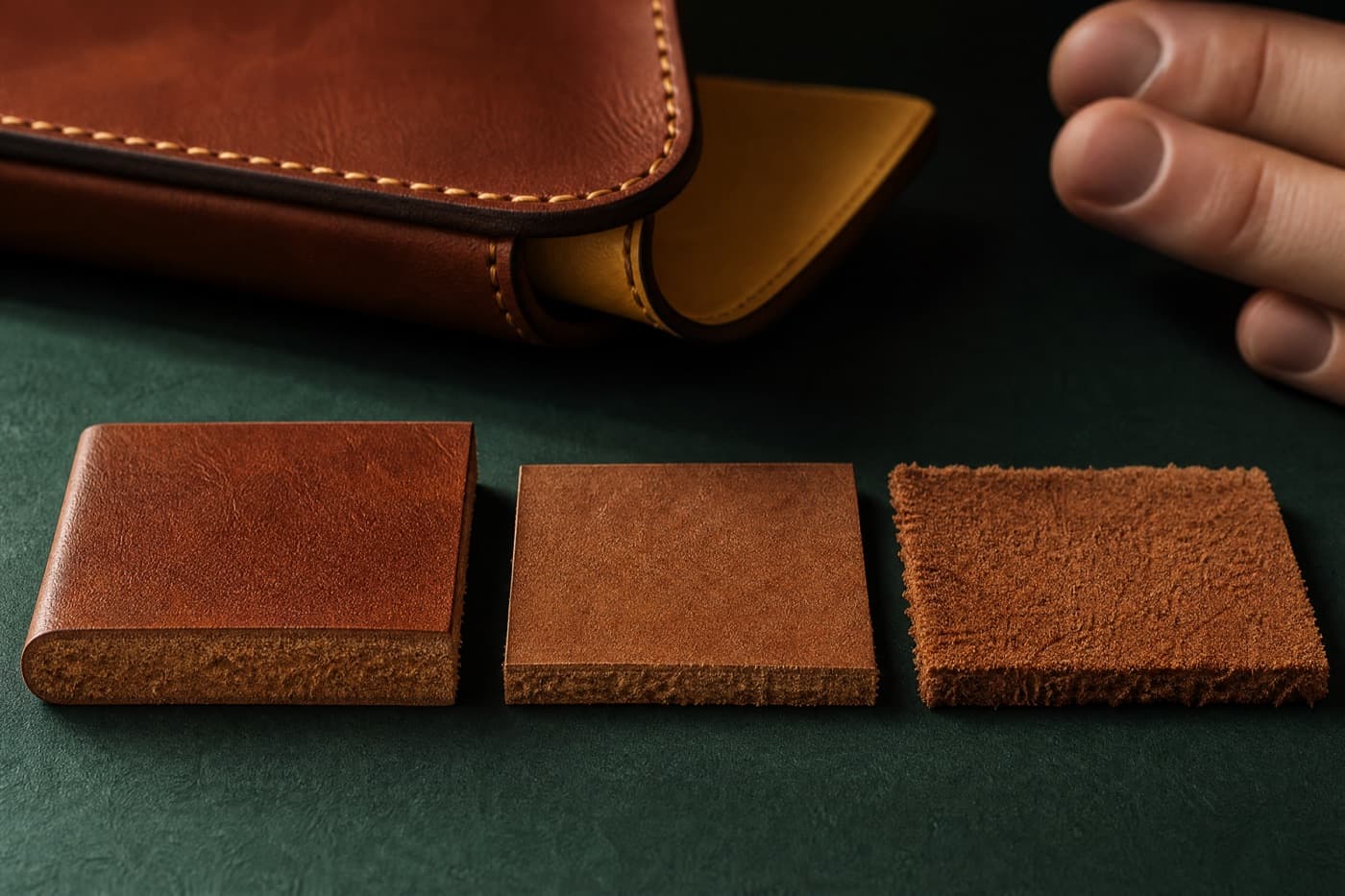
The Federal Trade Commission publishes guides for the leather goods industry (16 CFR Part 24). Their purpose is simple: a buyer must not be led to think a product is a better grade of leather, or a different material, than it is. The word “leather” on its own satisfies nobody, so we do not use it on its own.
| What it is | What we must call it | In this catalogue |
|---|---|---|
| The outer surface of the hide, complete, nothing sanded off | Full-grain leather | 7 articles |
| The upper layer with the surface corrected by sanding | Top-grain leather | 30 articles |
| The fibrous lower layer, after the grain layer is separated off | Split leather — and, if it is coated, coated split leather | 1 article |
| Leather scrap ground up and bonded with adhesive onto a backing | Bonded leather, with the leather content stated as a percentage | Not used |
| A synthetic with no leather in it at all | Its actual material name, such as polyurethane-coated fabric | Not used for any outer surface |
Words we will not use
You will not find “genuine leather” or “real leather” anywhere on this site. Both sound like a guarantee of quality and are not one — in the trade, “genuine leather” is frequently applied to the lowest usable grade. You will not find “vegan leather” or “eco leather” either: if a material is not leather, the honest thing is to name the polymer.
The article that is split leather
C-01 — Tag Classic, USD 18. Coated split leather. The split is the fibrous layer remaining after the grain layer is separated from the hide; the surface is a polyurethane coating applied to the split, not a natural grain. It is not full-grain or top-grain leather. We could have described it only as “leather” and stayed within the letter of most people’s expectations. We would rather tell you what an eighteen dollar luggage tag is made of, and let you decide whether that is the right eighteen dollars.
2. Tanning, and why it decides how an article ages
Tanning is what turns a hide into leather. We use two methods and say which on every article page.
- Vegetable tanning uses tannins from bark and other plant matter over several weeks. It produces a firm leather with a warm, pale colour that darkens dramatically with light and handling. Every uncoated article we make is vegetable-tanned.
- Combination tanning begins with chromium salts and finishes with vegetable tannins. It produces a softer, more colour-stable leather that holds a pigmented finish. Most of our pigmented articles are combination-tanned, and they will look much the same in three years as they do now.
Chrome-tanned and combination-tanned leather is the reason most of our articles carry a California Proposition 65 warning. That warning, and which articles carry it, is set out on the Product Safety page.
3. What two years actually looks like
The four photographs below are the same uncoated full-grain passport cover, photographed on the same ground under the same light at four points across two years of pocket carry. Nothing has been done to it beyond being used.
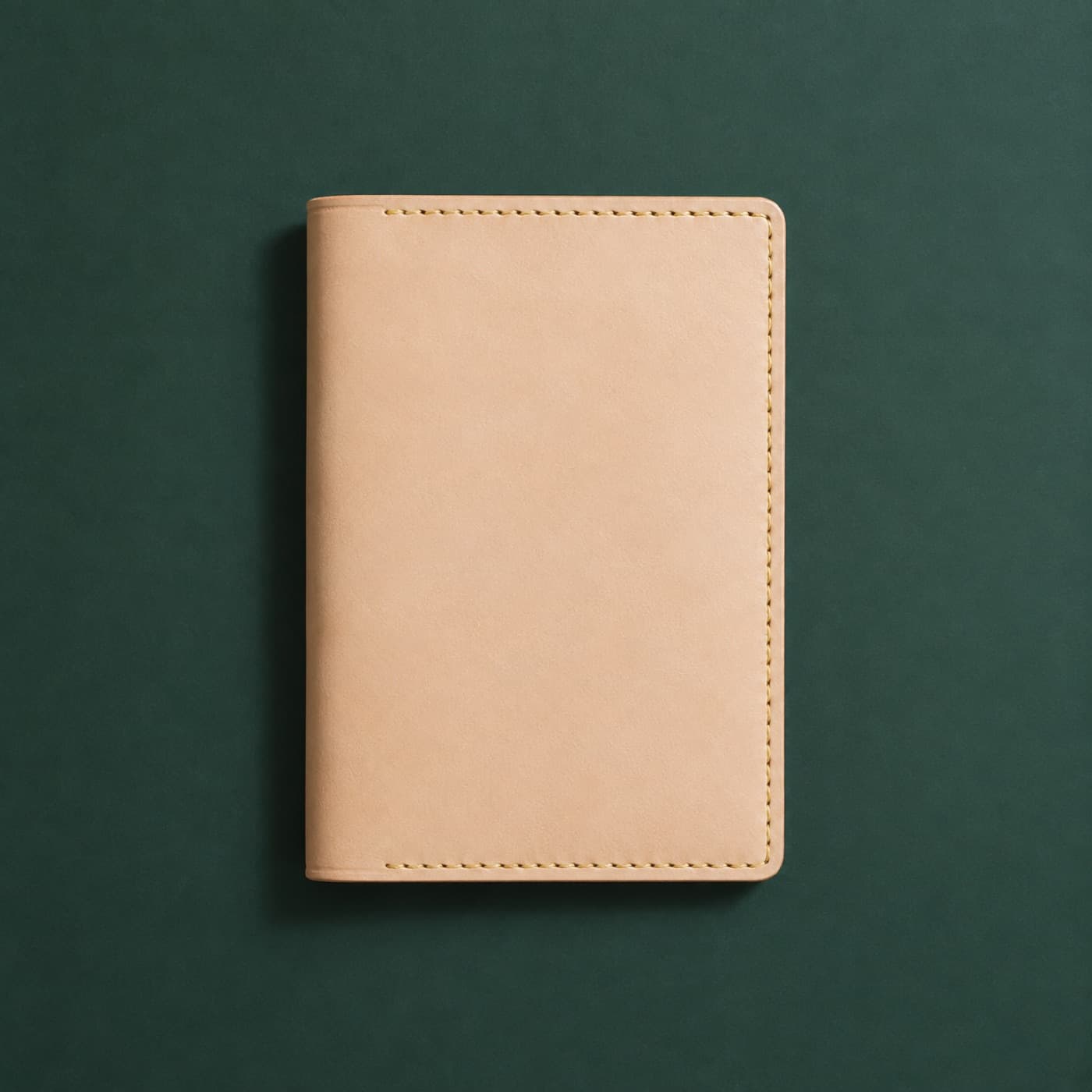
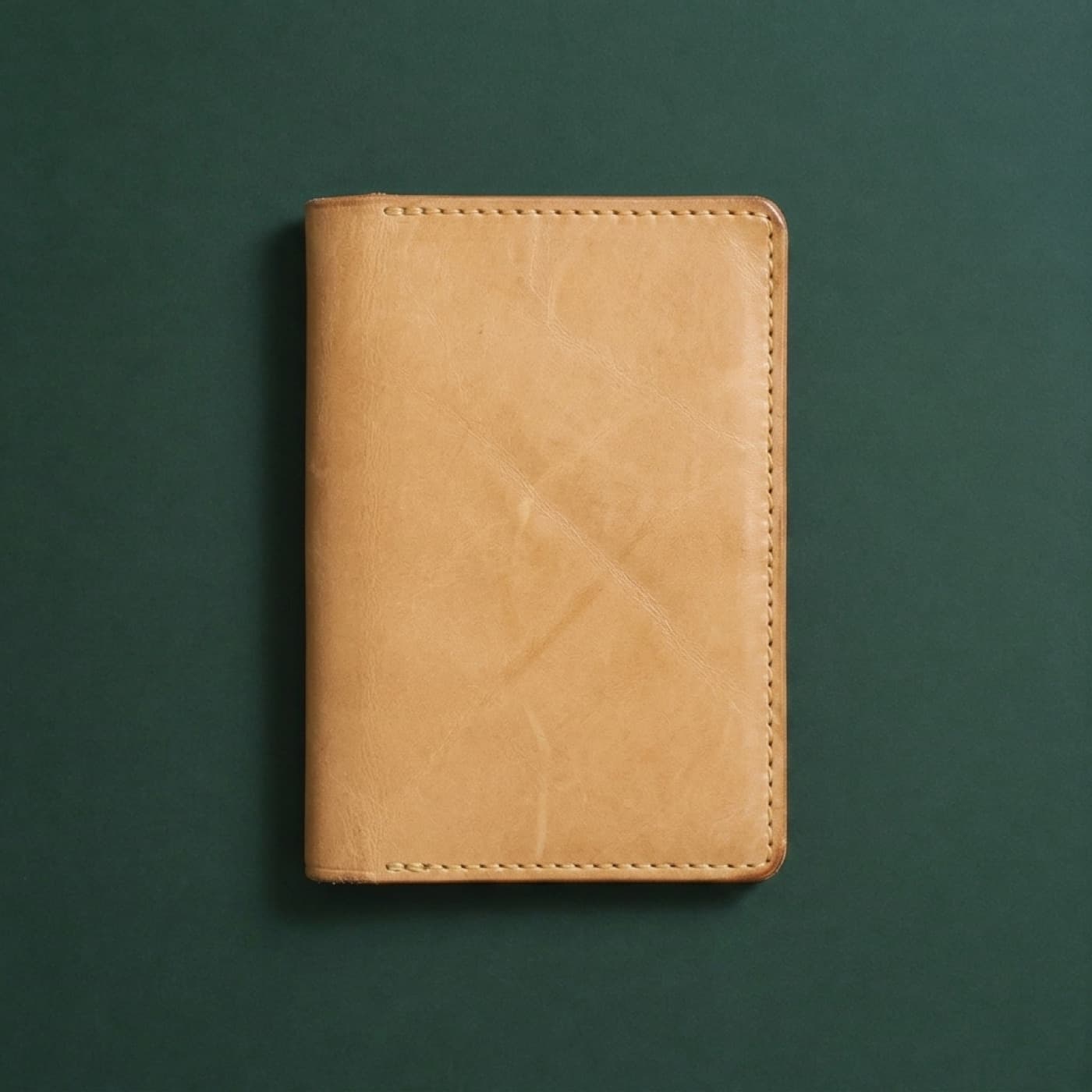
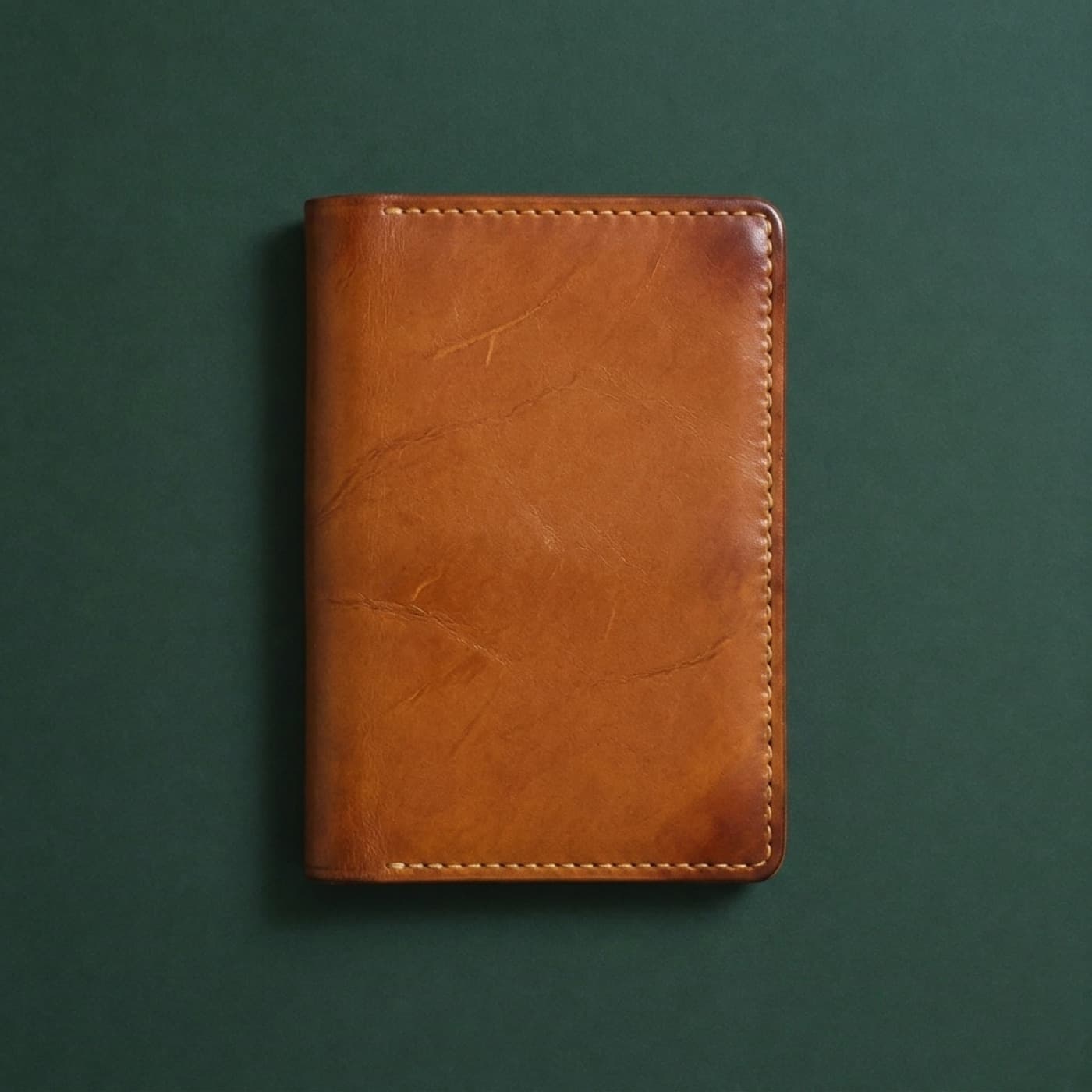
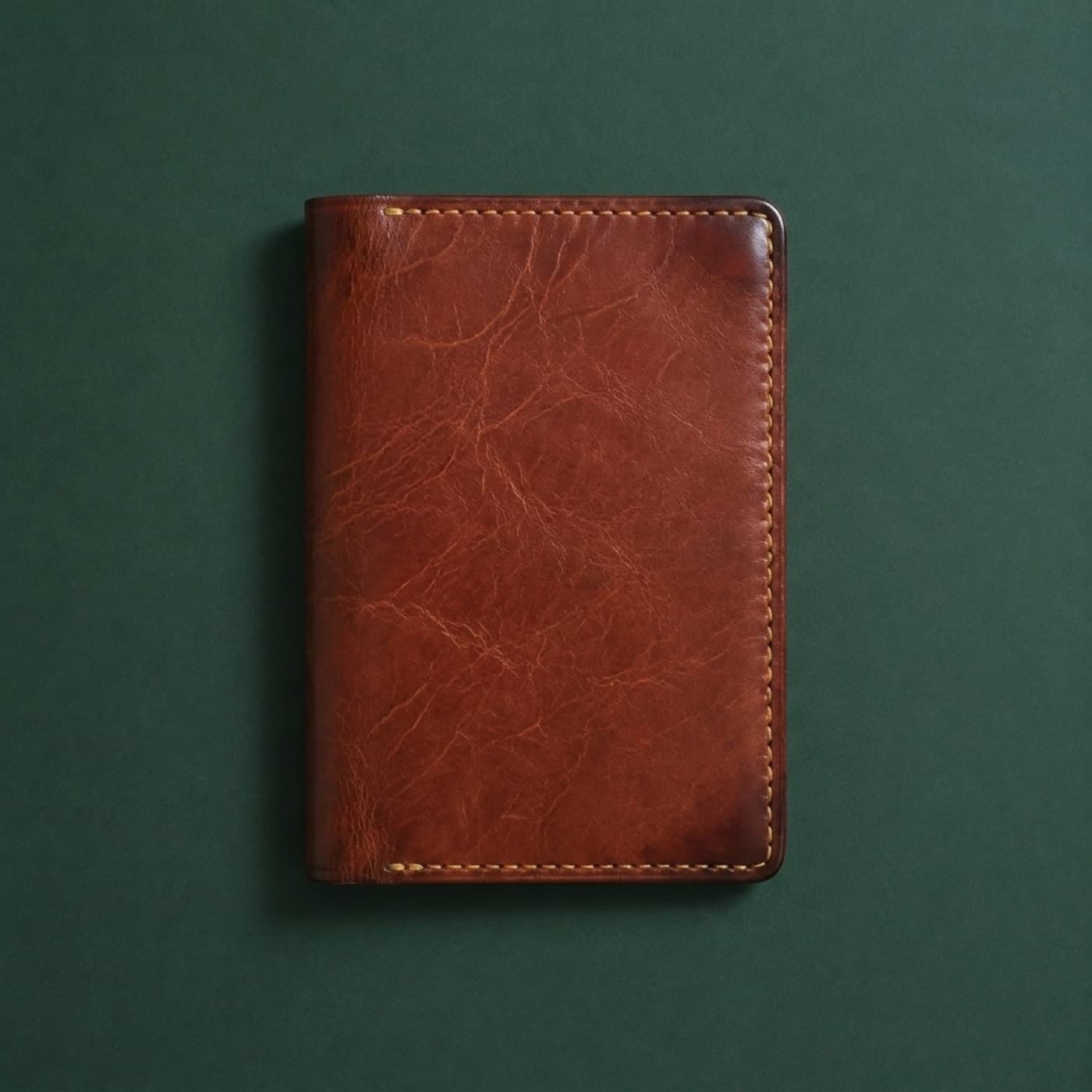
This is the expected behaviour of the material, described on each affected article page as a patina notice. It is not reversible, it cannot be evened out, and it is not a defect. If you want an article that stays the colour you bought, choose a pigmented one — every article page states which it is.
4. Natural characteristics, and where the line is
A hide is the skin of an animal that lived somewhere. The following are characteristics of the material and are present in leather of every grade, including the most expensive:
- variation in grain pattern and density across a single article;
- shade differences between panels cut from different parts of a hide;
- growth wrinkles, particularly around the neck and shoulder;
- healed insect bites and range scars;
- fat wrinkles and looser fibre in areas cut from the belly;
- a natural smell, strongest in the first weeks, which fades.
None of these is a fault and none is grounds for a faulty-goods claim. They are stated here and again on every article page so that nothing about them is a surprise. If you receive an article and simply do not like the hide it came from, that is a perfectly good reason to send it back under the ordinary 30-day return — you do not need to call it a defect.
By contrast, these are faults, and we replace or refund them:
- stitching that is skipped, loose or has come undone;
- hardware that is bent, will not close, or has separated from the leather;
- a lining or panel that has delaminated;
- a cut edge that has split or is unfinished where it should be burnished;
- dimensions materially different from those stated on the article page.
5. Care
Every few months
Wipe with a dry, soft cotton cloth. That is genuinely most of it. Dust and skin oil are what dull a surface, and neither needs a product to remove.
Once or twice a year
Apply a very small amount of a neutral, colourless leather balm or cream with a cloth, work it in with your hands and buff off the excess. Less is better: leather absorbs what it needs and the rest sits on the surface attracting dust. Test on a hidden area first — any conditioner will darken uncoated leather, permanently.
Never
- Soak, submerge or machine-wash any article.
- Dry a wet article near a radiator, in direct sun or with a hairdryer — it will shrink and stiffen. Blot it, stuff it with paper and let it dry away from heat.
- Use saddle soap, alcohol, solvent, baby wipes or household cleaner.
- Use a coloured or pigmented cream on an undyed article.
- Store in a sealed plastic bag — leather needs to breathe or it will mildew.
Water, and what to expect
Nothing we make is waterproof and we do not sell any article as water-resistant. Uncoated vegetable-tanned leather will spot and darken where water lands, and those spots may or may not blend out over the following weeks. Pigmented articles resist light rain and should still be blotted dry rather than left.
Ink, dye and transfer
Uncoated leather can pick up dye from dark denim, from coloured cable insulation and from newsprint. Ink from a pen is permanent. These transfers are a consequence of the finish, not a defect in it.
6. Repair before replacement
Saddle stitching does not unravel: because each stitch is locked, a broken thread stays put and can be repaired locally. Any leather worker or shoe repairer can restitch a seam or replace a stud, usually for a few dollars. We would rather an article was mended than replaced, and we will tell you honestly when something is worth mending and when it is not.
Contact: support@polarbearleathergoods.shop · +1 909 402 3517
BAGS TO GO ENTERPRISES, LLC, 4050 SW 11th Terrace, Fort Lauderdale, FL 33315, USA